


Dashmetry Winter

Think your reflexes are sharp? Dashmetry Winter will shatter that illusion. This rhythm-based platformer combines icy obstacles with beat-driven gameplay that destroys overconfident players. One mistimed jump. Game over.
Controls
What is Dashmetry Winter?
The Rhythm Platformer That Exposes Your Weaknesses
Dashmetry Winter is a winter-themed rhythm platformer where you control a cube hurtling through deadly obstacles synchronized to pulsing beats. Sharp spikes. Spinning saws. Precision gaps. One mistimed input and you're back at the start.
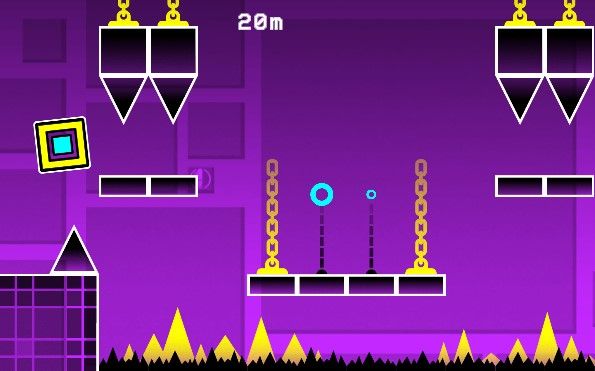
Sounds simple? Here's the brutal reality: 90% of players crash before reaching the 30-second mark. Their timing is off. Their rhythm sense is weak. Their confidence crumbles faster than their cube hits a spike.
Why This Game Will Humble You
- Beat-synchronized obstacles: Every spike, every platform, every trap moves to the music. Miss the rhythm? You die.
- One-hit death: No health bars. No checkpoints. No second chances. Crash once and restart from zero.
- Escalating difficulty: The music intensifies. The obstacles multiply. Your "good" skills become inadequate.
- Winter-themed chaos: Icy visuals mask deadly precision requirements. The beautiful scenery distracts you right before a spike ends your run.
Game Mechanics: The Systems Designed to Break You
How Dashmetry Winter Works
The Cube You Control
Your cube moves forward automatically. You don't control speed or direction—only jumping. This simplicity is deceptive. Players who think "just jumping" is easy discover their overconfidence.
Rhythm-Based Obstacles
Every obstacle syncs to the background music:
- Spikes: Rise and fall with the beat. Time your jump or die.
- Circular saws: Rotate in rhythm. Hesitate and they'll slice through you.
- Platforms: Appear and disappear to the tempo. Miss the beat, miss the platform, miss your life.
- Gravity portals: Flip your orientation when the bass drops. Disorientation kills.
The Music Isn't Just Background
The soundtrack isn't decoration—it's your survival guide. Players who ignore the beat crash repeatedly. Players who feel the rhythm survive longer. The question: can you actually hear it, or are you rhythm-deaf?
Difficulty Progression
- First 10 seconds: False confidence. Easy jumps. You think you've got this.
- 10-30 seconds: Reality check. Patterns get complex. Your "easy" run ends.
- 30-60 seconds: The filter. 95% of players never reach this point.
- 60+ seconds: Elite territory. Reserved for players who actually practiced.
Game Modes: Choose Your Destruction
Two Ways to Prove You're Not Good Enough
Classic Mode
Handcrafted levels designed to test specific skills. Each level increases difficulty progressively. Complete one? The next is harder. Complete all? You're in the top 1%.
What Classic Mode Tests:
- Pattern recognition
- Rhythm consistency
- Precision under pressure
- Patience through repeated failure
Most players quit at level 3. They blame the game. The game isn't unfair—their skills are inadequate.
Endless Mode
Procedurally generated chaos. No memorization possible. Pure reflex and rhythm response. How long can you survive when patterns are unpredictable?
What Endless Mode Reveals:
- Your true reaction speed
- Whether you actually feel rhythm or fake it
- How fast you panic under pressure
- Your skill ceiling (spoiler: it's lower than you think)
Which Mode Exposes You Faster?
Classic Mode destroys players who can't learn patterns. Endless Mode destroys players who rely on memorization. Both modes destroy overconfident players equally.
Controls: Simple Inputs, Complex Execution
The Deceptively Easy Control Scheme
Three Ways to Jump
| Input | Action |
|---|---|
| Left Mouse Button | Jump |
| Spacebar | Jump |
| Up Arrow Key | Jump |
That's it. One action. Three input options. "How hard can it be?"
Why Simple Controls Don't Mean Easy Game
Timing precision: Your jump must sync with the beat. Not "close to" the beat. Exactly on it. Milliseconds matter.
Anticipation required: You're not reacting to obstacles—you're predicting them. React and you're already dead.
Consistent rhythm: One perfect jump means nothing. You need 50 consecutive perfect jumps. Then 100. Then 200.
The Input Reality
Players who mash the jump button crash immediately. Players who wait too long crash immediately. Only players who internalize the rhythm survive.
The controls are accessible. The execution is brutal. Don't confuse the two.
Why Players Fail: A Brutal Analysis
The Mistakes That End Your Run
We've analyzed thousands of Dashmetry Winter attempts. Here's why players fail:
They Ignore the Music
60% of crashes happen because players treat this as a visual reaction game. It's not. It's a rhythm game with visual elements. Players who mute the audio crash three times more often.
They Panic Jump
See a spike approaching? Panic-jump immediately? Congratulations—you just jumped directly into it. The spike was synced to drop BEFORE you needed to jump. Panic destroyed you.
They Don't Maintain Rhythm
Early jumps feel good. Then players lose the beat. Their timing drifts. Their jumps desync. They crash into obstacles they could easily avoid if they'd stayed in rhythm.
They Blame the Game
"That spike was unfair." No. You mistimed your jump.
"I pressed jump but nothing happened." No. You pressed too early and the cooldown wasn't ready.
"The game is impossible." No. Players complete it daily. Your skills are the problem.
They Give Up Too Early
The first 50 crashes teach you patterns. The next 50 refine your timing. The next 50 build consistency. Players who quit after 10 crashes never learned anything.
Advanced Strategies: What Survivors Actually Do
Techniques That Separate Survivors From Crashers
Listen Before You Look
Elite players process audio before visual cues. The beat tells you when to jump. The visuals confirm it. Reverse this priority and you're reacting instead of anticipating.
Tap the Rhythm Externally
Before attempting difficult sections, tap the beat on your desk. Feel it physically. Then translate that rhythm to your jumps. Players who internalize rhythm externally perform better.
Watch the Patterns, Not the Cube
Your cube is a distraction. Watch the obstacles approaching. Learn their spacing. Predict their timing. Players fixated on their cube miss incoming threats.
Accept Death as Data
Every crash teaches you something:
- Where is the dangerous section?
- What's the timing requirement?
- Which pattern needs practice?
Players who rage-restart learn nothing. Players who analyze crashes improve faster.
The 100-Attempt Rule
Most players give up before 100 attempts. Coincidentally, most players never master the game. The players who push through 100, 200, 500 attempts? They're the ones posting completion runs.
Your current skill isn't your ceiling. But reaching your ceiling requires attempts you probably won't make.
The Challenge: Prove Your Rhythm Skills
Your Real Test Starts Now
Everyone thinks they have rhythm. Dashmetry Winter reveals the truth.
The Challenge
- Survive 60 seconds in Endless Mode
- No crashes
- Consistent rhythm throughout
The Statistics
- 95% of players crash before 30 seconds
- 99% never reach 60 seconds
- The 1% who do? They've crashed hundreds of times learning
What Dashmetry Winter Proves
This isn't just a game. It's a measurement of:
- Rhythm sense: Can you actually feel a beat?
- Precision: Can you time inputs to milliseconds?
- Pattern recognition: Can you learn from mistakes?
- Mental fortitude: Can you persist through failure?
The Honest Truth
Most players will:
- Try the game confident they'll do well
- Crash repeatedly in the first 20 seconds
- Blame the controls, the game, the "unfair" obstacles
- Quit before improving
The few who accept responsibility for their failures? They're the ones who eventually succeed.
Think you're different? Prove it.
Customization: Rewards for Those Who Earn Them
The Progression System
Earning Diamonds
Survive longer, collect more. Diamonds appear throughout levels, rewarding players who:
- Stay alive (obviously)
- Take risky paths for bonus diamonds
- Maintain consistent runs without crashing
What Diamonds Unlock
Lucky Wheel: Spin for random rewards. Cosmetics, icons, color schemes. The longer you survive, the more spins you earn.
Cube Customization: New icons and colors for your cube. Purely cosmetic—but surviving long enough to earn them proves your skill.
Special Packs: Exclusive customization bundles for dedicated players.
The Catch
Customization requires survival. Crash constantly? You earn nothing. The best cosmetics belong to the best players. Your default cube broadcasts your skill level to anyone watching.
Why Customization Matters
It doesn't affect gameplay. But it represents achievement. A customized cube means you've survived when others crashed. It's visible proof of competence in a game designed to expose incompetence.
FAQ
Frequently Asked Questions
Is Dashmetry Winter free to play?
Yes. Your rhythm skills (or lack thereof) are the only cost.
How do I control the cube?
Left mouse button, Spacebar, or Up Arrow—all do the same thing: jump. Simple controls, merciless execution.
Why do I keep dying?
Probably ignoring the rhythm, panic-jumping, or insufficient practice. Pick one and fix it.
Can I play on mobile?
Yes. Tap to jump. The precision requirement remains identical.
What's a good survival time?
- 20 seconds: Below average
- 40 seconds: Average
- 60 seconds: Good
- 90+ seconds: Exceptional
Does the game get harder?
Yes. Progressively. Obstacles multiply. Patterns complexify. Your current "best" becomes inadequate.
How do I improve?
Listen to the music. Internalize the rhythm. Analyze your crashes. Practice consistently. There's no shortcut.
Is there a way to practice specific sections?
In Classic Mode, levels can be replayed. In Endless Mode, survival is the only practice.
Why does this game feel impossible?
It's not impossible—players complete it regularly. The feeling of impossibility comes from skill gaps. Close those gaps and "impossible" becomes "difficult" becomes "challenging" becomes "satisfying."
I keep crashing at the same spot!
That spot exploits a specific weakness in your timing. Identify the pattern. Adjust your approach. Or keep crashing—the spikes don't care about your frustration.


Comments